



 Dermatology
How to tell if a mole is dangerous: the ABCDE rule
 Dr. Keila Mitsunaga
In this article
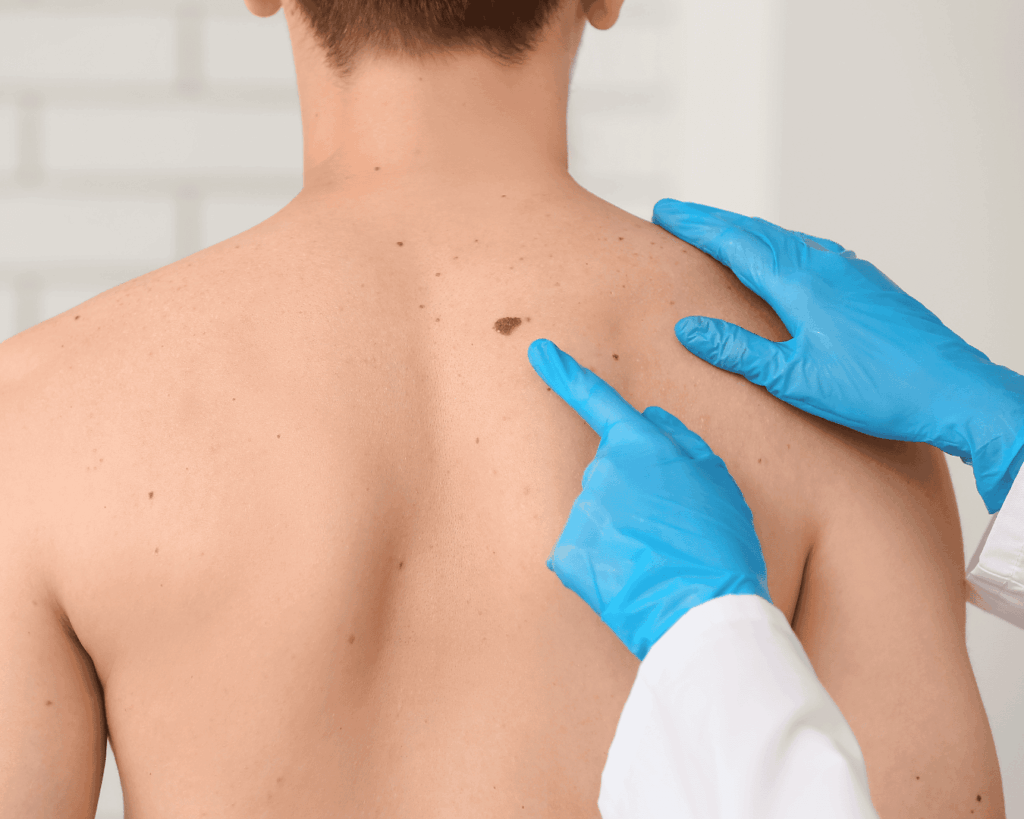
Most moles are benign and cause no problems. However, certain changes in a mole can be a warning sign and justify an assessment by a dermatologist.
One of the main reasons for checking the skin regularly is to detect, at an early stage, lesions that could correspond to a melanoma, the most aggressive type of skin cancer. When diagnosed early, melanoma has a very favorable prognosis.
The ABCDE rule: which changes to watch for
A simple way to remember the main warning signs is the ABCDE rule.
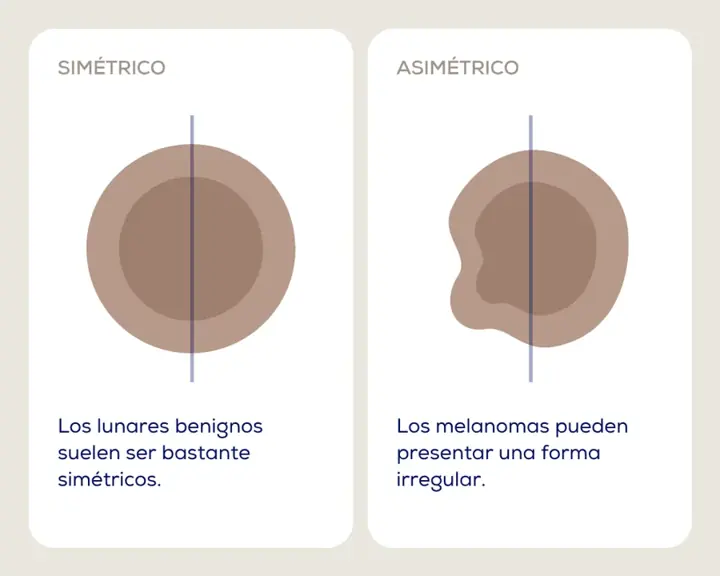
A · Asymmetry
One half of the mole does not match the other. Benign moles tend to be fairly symmetrical, whereas melanomas may have an irregular shape.
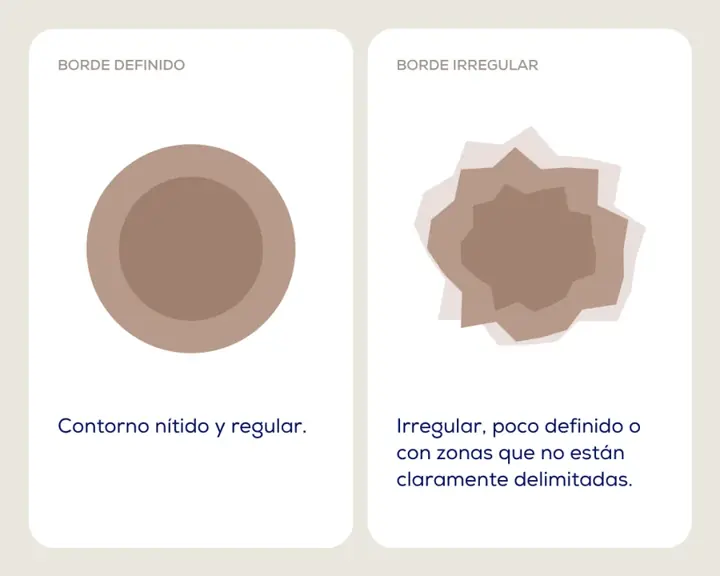
B · Border
The edge of the mole is irregular, poorly defined or has areas that are not clearly outlined.
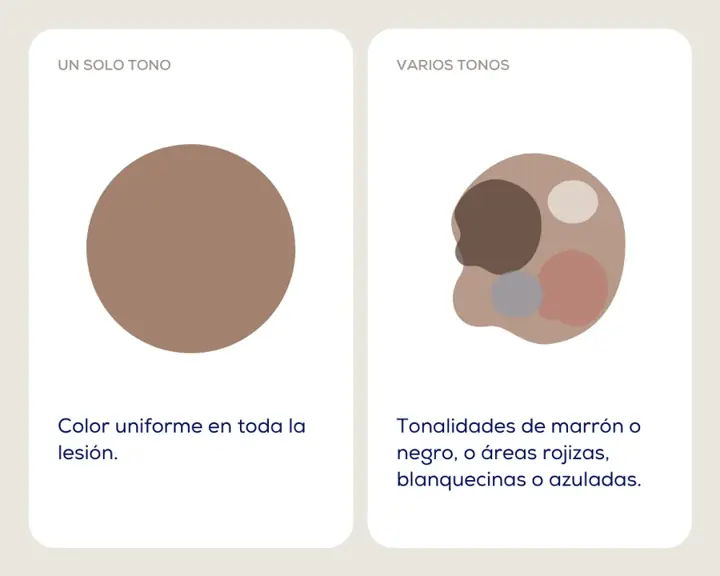
C · Color
The lesion shows different colors or shades: for example, various tones of brown or black, or reddish, whitish or bluish areas.
D · Diameter
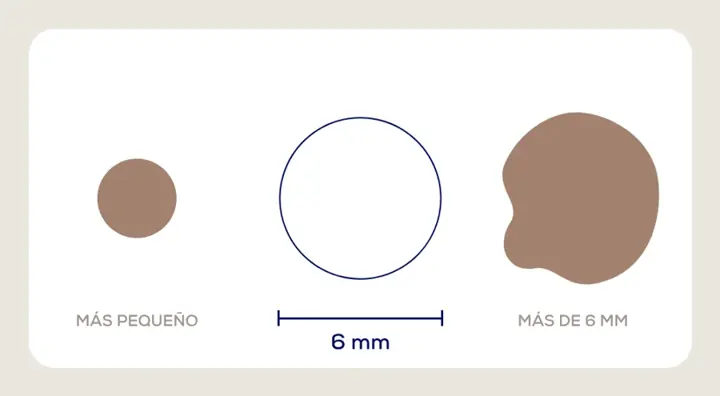
Traditionally, a diameter of more than 6 mm has been considered a sign worth attention. However, a melanoma can be smaller, so size alone does not tell you whether a mole is dangerous.
E · Evolution
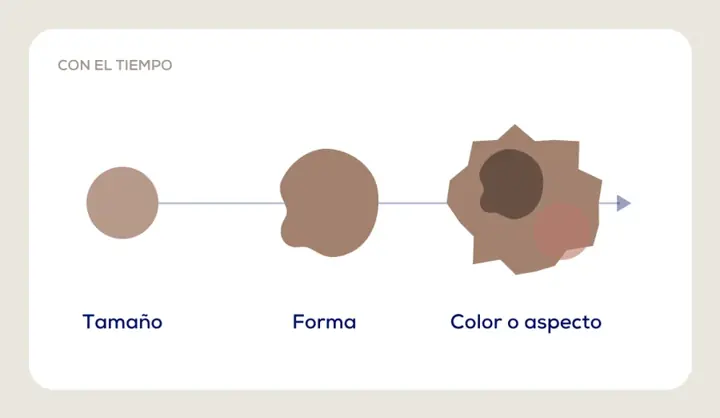
This is probably one of the most important signs: a lesion that changes over time in size, shape, color or appearance should be assessed by a dermatologist.
The ugly duckling sign: when one mole looks different from the rest
Alongside the ABCDE rule, there is a very simple guideline: pay attention to the mole that does not look like the others.
Most people have moles with fairly similar features. If a lesion clearly stands out from the rest in shape, color or appearance, it may be worth having it checked, even if it does not meet all the ABCDE criteria. Dermatologists call this the ugly duckling sign.
What if a mole itches, bleeds or hurts?
Itching, bleeding, crusting or pain can also be a reason to see a doctor, especially if these changes are new or persist over time.
Even so, having one of these signs does not necessarily mean that the mole is malignant. Many benign lesions can show similar changes or symptoms. It is the dermatological assessment that determines whether a lesion needs follow-up, dermoscopy or other tests.
When should you see a dermatologist?
It is advisable to request an assessment if you notice:
- A new mole that appears in adulthood.
- A mole that is growing or changing.
- A lesion that is clearly different from the rest of your moles.
- Changes in shape, color or border.
- Bleeding, persistent itching or crusting with no clear cause.
- A lesion that worries you, even if you cannot explain exactly why.
Regular check-ups are also advisable for people with many moles (more than 50 to 100 over the whole body) and for those with a close relative (parent, sibling or grandparent) who has had a melanoma.
It is also worth remembering that not all skin tumors look like a classic mole. They can appear on different parts of the body, including the palms of the hands, the soles of the feet, the genital area, under the nails or on the scalp.
In summary
The ABCDE rule helps identify changes that deserve attention, but it cannot be used to diagnose a melanoma at home. If a mole changes, bleeds, itches, grows or is simply different from the others, the best course is to see a dermatologist.
A dermatological check-up, especially when supported by dermoscopy, makes it possible to assess features that are not always visible to the naked eye and to decide whether a lesion needs follow-up or treatment.
When in doubt, it is better to have a mole checked than to ignore a change.
Article written by Dr. Keila Mitsunaga, dermatologist at Unidad Médica Angloamericana.
This article is for general information and does not replace an assessment by a doctor. If you have symptoms or questions about your case, please see a specialist.
Unidad Médica Angloamericana
Forty years of private practice in Madrid
Our facilities
The clinic at Paseo de la Castellana, 98




Do you need to see a specialist?
Write to us or call us and our team will guide you to the right specialty and physician, and help you arrange your appointment.


